
By Nancy Rabenantoandro, Manoa Rajaonarivelo, Sarobidy Rakotonarivo
Every scientific paper has a story that begins long before the paper is published.
Ours began with people sharing their memories of changing landscapes. A landscape is never just a collection of trees, fields and open spaces. For the people who live in it, it holds memories, livelihoods, everyday struggles and expectations for the future. It changes with time, sometimes gradually, sometimes dramatically. And those who depend on it often notice these changes long before they appear in scientific reports. Understanding these relationships was at key aim of our research in Madagascar.
Our recently published paper, “Looking back, looking ahead: Local perspectives on landscape changes and native-tree restoration in Madagascar”, brings together perspectives from communities across three distinct forest biomes in Boeny, Anosy and SAVA. We explored how landscapes have changed, what people expect for their future, whether restoration has a place in those futures, and what forms of restoration they would like to see.
But the publication itself is only one part of the story. Behind it lies a collective journey that took us from community conversations to data analyses, from early manuscript drafts, many rounds of editing, international conferences, and finally to publication. This is the story behind that journey.
It began with listening
Before there were figures to interpret or results to discuss, there were conversations. As part of the Demand4Restoration research project, we engaged with communities across three distinct forest regions of Madagascar. Through participatory mapping, approximately 450 households in 35 villages took part in discussions about the evolution of their landscapes. Participants reflected on what their surroundings had looked like in the past, what they see today, what they expect in the years ahead, and what kind of landscape they would like future generations to inherit. These conversations were central to the research. They reminded us that landscape change is experienced differently by different people, and that the future of a forest cannot be understood independently of the lives connected to it.
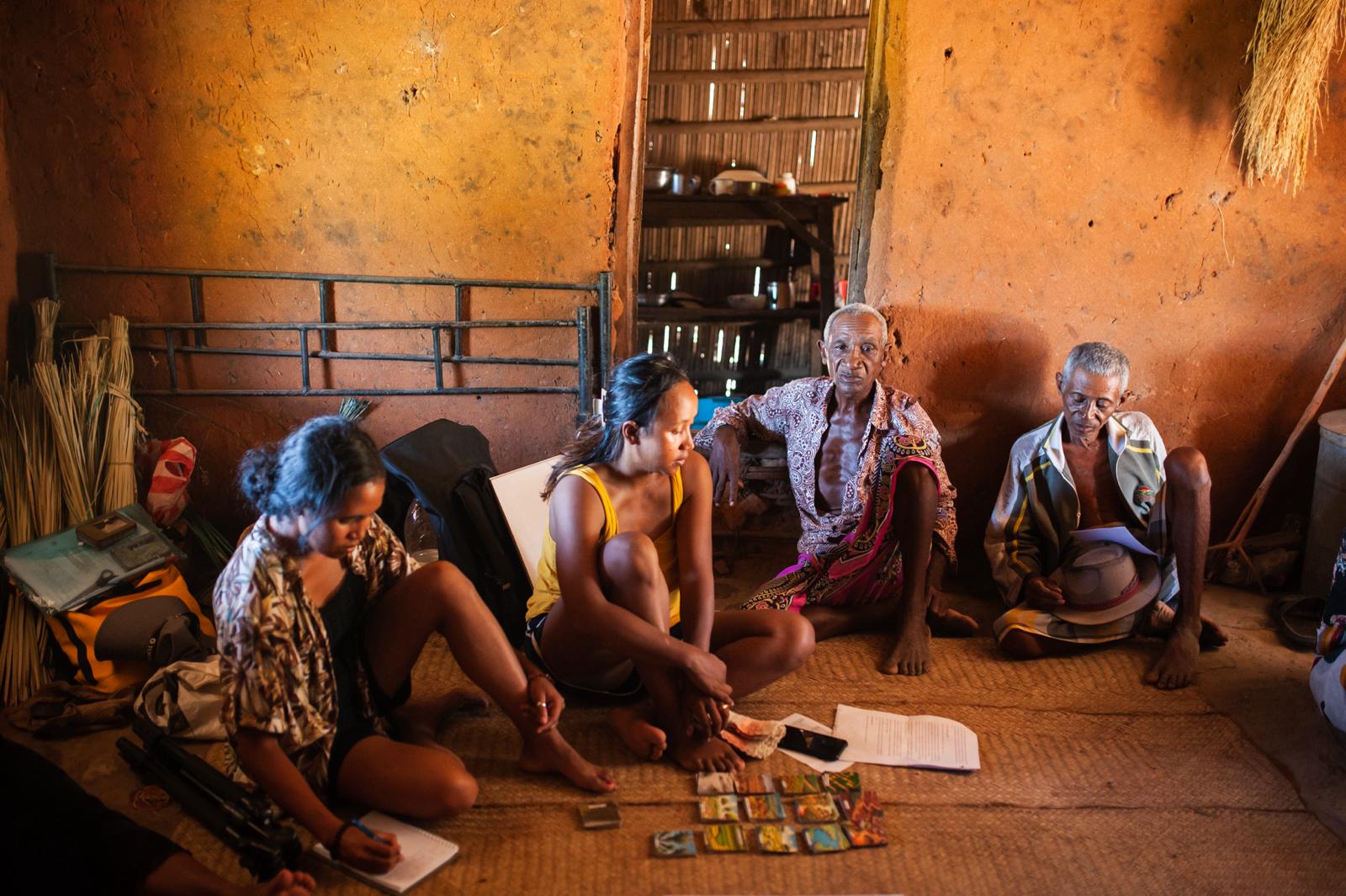
Manoa Rajaonarivelo provides a more detailed account of the fieldwork in this blog post, “Participatory Mapping: Understanding Landscape Restoration in Madagascar,” taking us behind the scenes of the participatory mapping process. She describes how simple tools, such as colourful laminated land-use squares, large maps, and facilitated group discussions, helped turn abstract questions about restoration into concrete, lively conversations rooted in people’s everyday experiences of the land.
Making sense of hundreds of perspectives
We returned with a substantial body of information: maps, discussions, observations and different visions of the landscapes. The challenge was to bring these perspectives together without losing the richness of the experiences behind them. What patterns could we identify across the three regions? How could we compare past and present landscapes with the futures people anticipated and desired? And how could we distinguish between what communities expected to happen and what they actually hoped for?
The data came with its own complexities, making this process far from straightforward. We analysed the participatory maps to identify land-use patterns and changes across different time horizons, while the recorded discussions were transcribed and examined to better understand the experiences, reasons and aspirations behind these landscape dynamics. Bringing these two sources together helped us connect the changes represented on the maps with the perspectives shared by participants.
Each analytical step required time, careful consideration and sometimes rethinking our choices. We explored different ways of interpreting the results, always trying to build a robust analysis that remained closely connected to our research questions. The objective was not simply to produce compelling figures, but to tell a scientifically sound story while remaining faithful to what participants had shared.
Gradually, an interesting contrast emerged
If current trends continued, communities anticipated further pressure on natural forests, particularly through the expansion of agricultural land. Yet their desired futures revealed a different ambition: more native forests and less open and degraded land. This difference between expected and desired landscapes became one of the most compelling findings.
It suggested that the future people anticipate is not necessarily the future they want. And that distinction matters. It invites us to look beyond observed land-use trends and ask what prevents local aspirations from becoming reality.
A paper is built through many voices
Turning these findings into a scientific paper was another journey in itself. The first drafts were only the beginning. Writing involved deciding which findings deserved emphasis, how to structure the argument, which interpretations were sufficiently supported, and how to position our contribution within the broader scientific literature.
Through successive drafts and exchanges among co-authors, ideas were questioned, arguments refined and sections rewritten. Different perspectives helped us identify weaknesses, clarify our reasoning and strengthen the connections between the results and their wider implications. Sometimes, improving a paper means recognising its central contributions and finding the clearest and simplest way to communicate them. This process demanded patience and scientific rigour, but it also reflected the value of collaboration. Each round of feedback brought another opportunity to look at the research differently.
The manuscript gradually became more than a presentation of results. It became a shared effort to communicate what these findings mean for the future of forest landscape restoration.
Taking the conversation beyond our own research team
Before publication, our findings travelled beyond the manuscript. We had the opportunity to present this work at two international scientific conferences: the World Biodiversity Forum (WBF) in Davos, Switzerland and POLLEN Conference in Barcelona, Spain. These encounters brought new questions and perspectives. Discussions with fellow researchers encouraged us to revisit interpretations, sharpen our arguments and reflect on the broader relevance of our findings. The conferences became more than opportunities to present our work; they were part of the research process itself.
By the time the manuscript moved towards its final version, it had been shaped not only by the communities involved and the research team working on it, but also by exchanges within the wider scientific community.
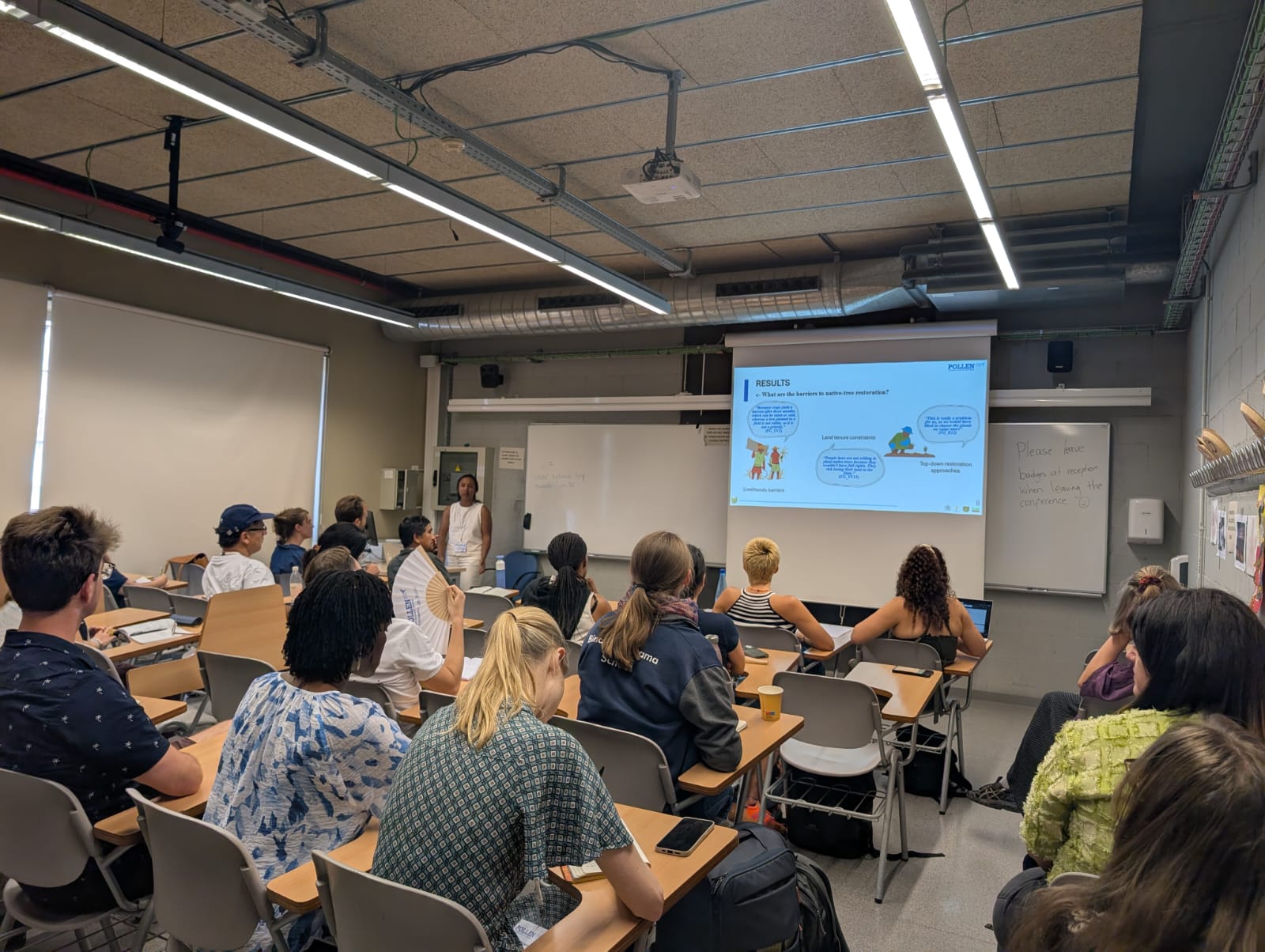
Research presentation by Manoa Rajaonarivelo at POLLEN 2026 – Barcelona Spain
Carrying hope beyond
One question remained central throughout this journey: what do these findings mean beyond academia? The contrast between expected and desired landscapes tells us something important. Communities can aspire to see their native forests recover while facing economic, institutional and land-related constraints that make restoration difficult. Recognising this gap is essential. Restoration cannot be reduced to planting trees or reaching a predetermined number of hectares. It also involves understanding who has access to land, who can benefit from restored resources, what livelihood opportunities are available and how local priorities are reflected in restoration decisions.
We hope our findings can contribute to conversations and decisions that bring restoration closer to these local aspirations, particularly in Madagascar, where there is often a disconnect between commitments and realities on the ground.
But this work was never ours alone. It was made possible by communities who welcomed us and shared their experiences, implementing partners who stood alongside us, researchers and co-authors who helped shape the work, and partners who supported us along the way. We are deeply grateful to everyone involved, as well as to the Swiss National Science Foundation (SNSF) for its financial support.
Seeing our paper published in People and Nature is a moment of pride and gratitude. But perhaps more than an ending, it feels like another beginning. There are still landscapes to understand, questions to explore and aspirations worth working towards. Because, in the end, what matters is not only what we publish, but what we can help make possible together.