
By Ravaka Ralandisoa
What does it mean to learn to stand in the Court of Giants? For a long time, I thought it meant being “good enough”, “being ready”, “being certain.” But one moment taught me one of the most important lessons of my journey so far:
Just try. Give your best.
You have nothing to lose.
If you fail, you readjust and you try again.
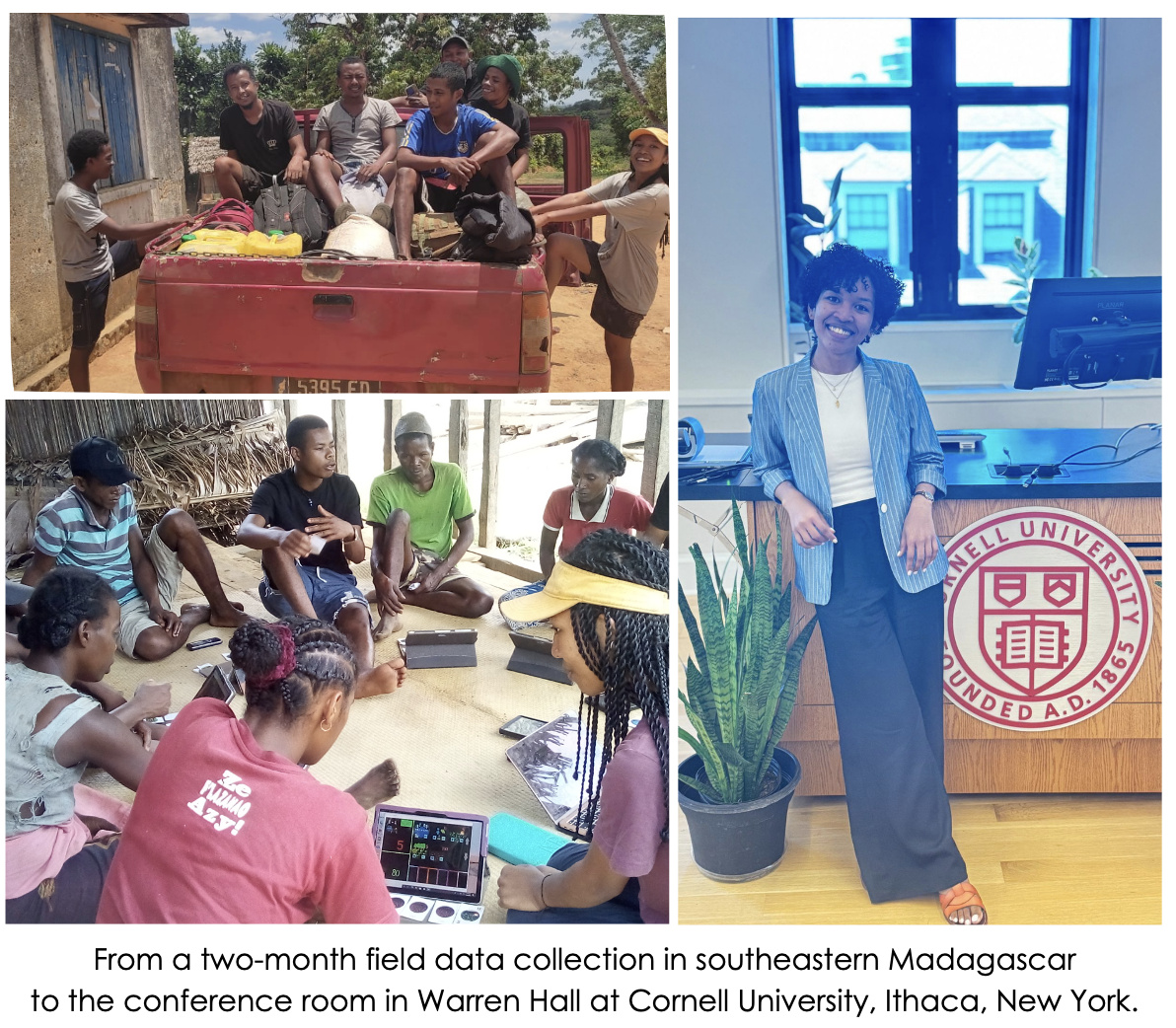
This lesson became clear to me after an intense two-month fieldwork period in South-Eastern Madagascar in December 2024. I conducted the AvecNous game, a research tool to study farmers’ behavior under individual versus VSLA cash transfers, with steady guidance from Prof. Andrew Bell from the conception of the game (I share more about his mentorship and our game design workshop experience here). The experience meant managing a full field mission: navigating logistics, adapting to unfamiliar dialects, working with largely illiterate populations in remote rural areas. It was exhausting, humbling, and deeply fulfilling. I will share more about that fieldwork in a separate blog.
At the end of that chapter, Dr. Sarobidy Rakotonarivo, my mentor, along with other colleagues, encouraged me to apply for the STARS Fellowship, a program I saw as big, competitive, and slightly intimidating. What they may not have noticed, or perhaps they did quietly, was how amazed I felt in that moment. Amazed not just by the opportunity itself, but by the confidence and simplicity with which they proposed it. As if it were obvious. As if it made sense.
I did not yet fully believe in my own ability. But they did. So I applied, and to my surprise, I was selected for the STARS Fellowship in 2025.
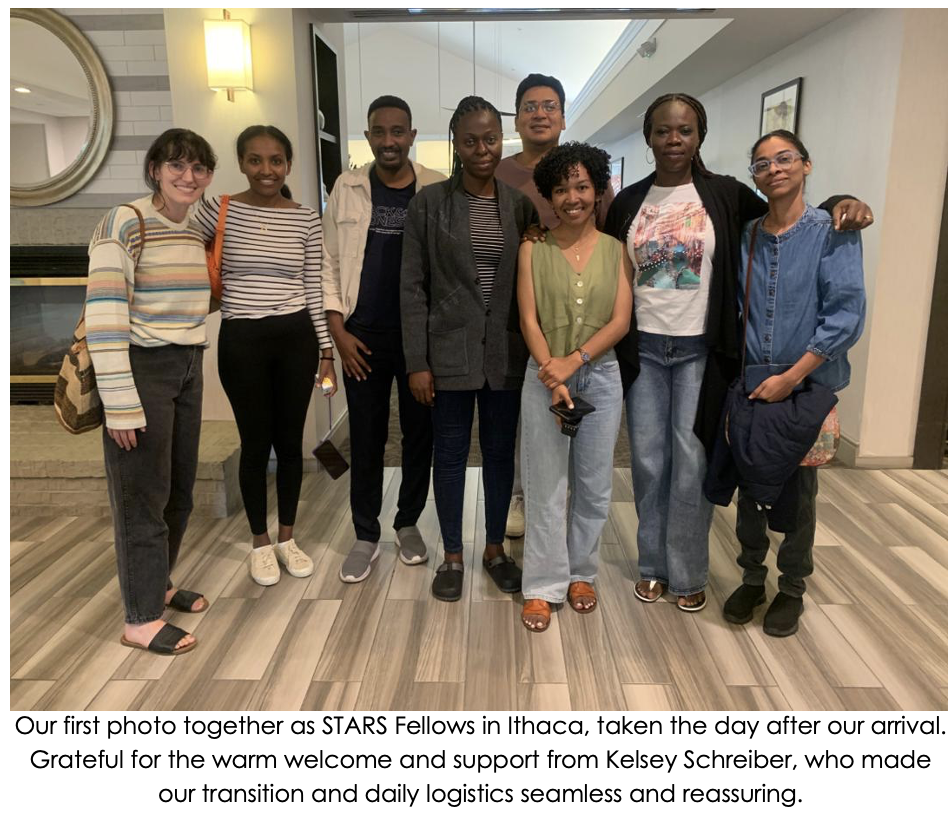
Another simple truth I began to realize is: Every day is a gift, an opportunity to surpass yourself, and to grow. Your environment and the people around you shape how you see yourself, how you face challenges, and how far you allow yourself to go.
Traveling to the United States for the first time was incredibly exciting and, at the same time, overwhelming. Everything felt big: the Cornell campus in Ithaca, the buildings in Washington, the conversations, the effortless confidence with which people carried themselves, and even the small-sized coffee cups!
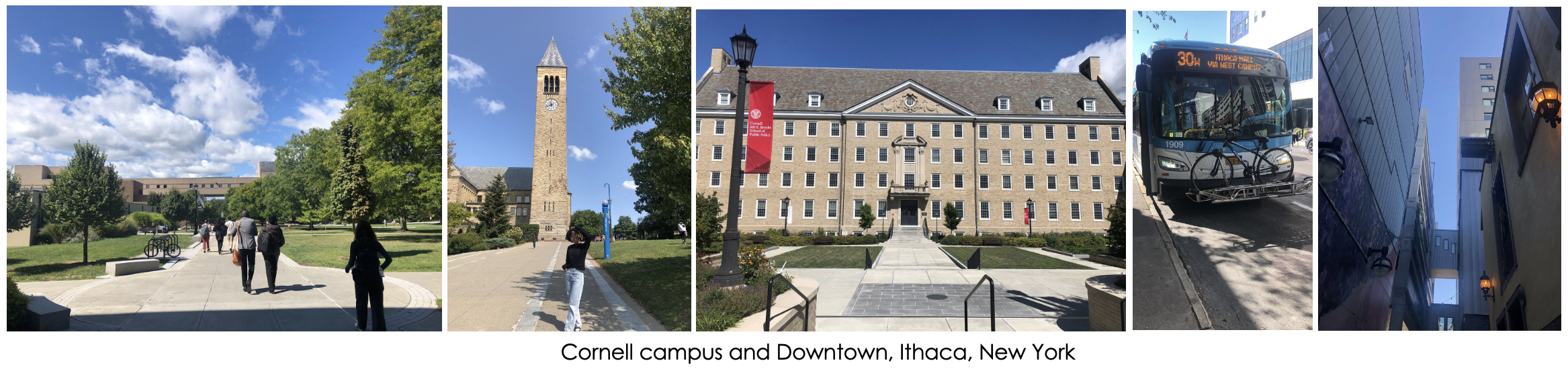
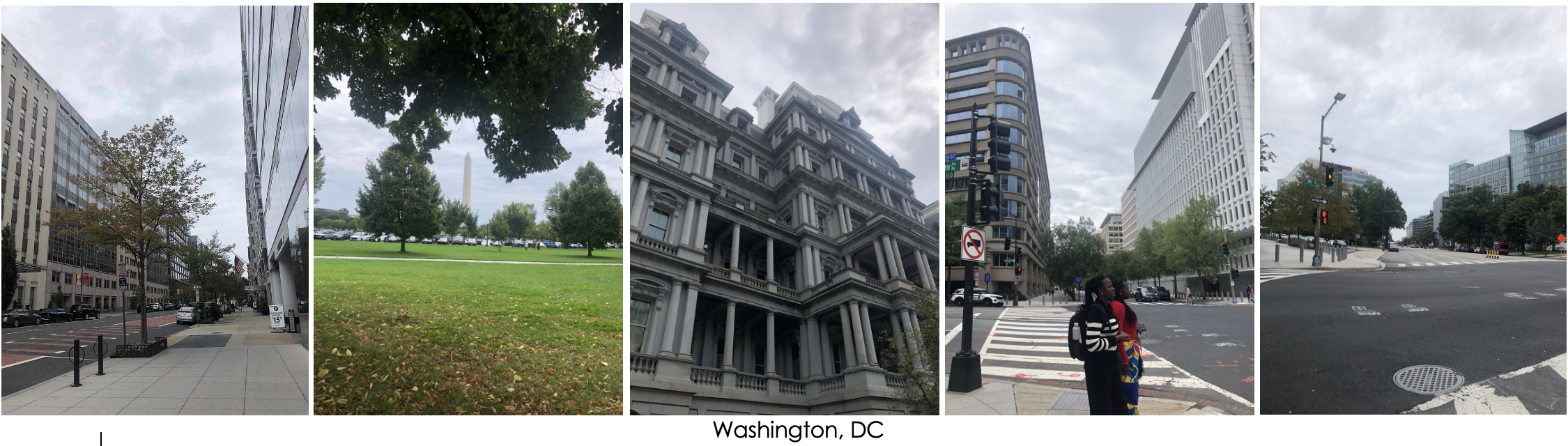
A familiar, quiet companion was beside me from the beginning: impostor syndrome. It followed me as I prepared to present my research to panels of experts at Cornell University and at the World Bank, receive detailed feedback on my paper draft, and engage in high-level technical discussions with researchers whose work I admired. Surrounded by highly skilled fellows, many already comfortable with advanced quantitative tools, econometric methods, and the broader world of economics research, I became aware of how much I still had to learn. I found myself worrying not just about my working paper, but about how they would perceive my capacity. And with that came the quiet question: Am I really good enough?
Stepping from my initial academic training in forestry and environmental sciences into a research space that required working with panel datasets, tackling intensive coding, and mastering econometric tools such as fixed-effects and mixed-effects models initially felt far outside my comfort zone. As a female scholar who has done all her studies in Madagascar, where many of these resources are not readily accessible, navigating this new technical area was challenging. STARS Fellowship helped me make that transition possible, with mentors who patiently guided me, access to tools I hadn’t used before, and hands-on feedback from experts. Their expertise was impressive, of course, but what stood out even more was their generosity with their time and genuine support. What once felt intimidating became one of the most rewarding parts of my journey.
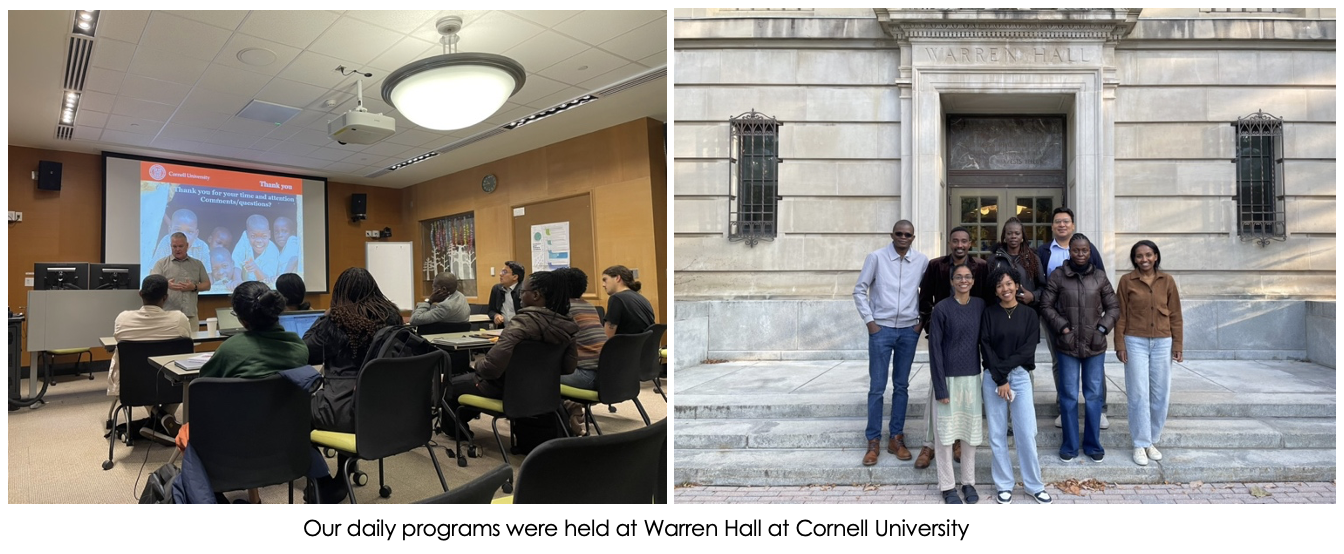
(Photos by Kelsey Schreiber, 2025.)
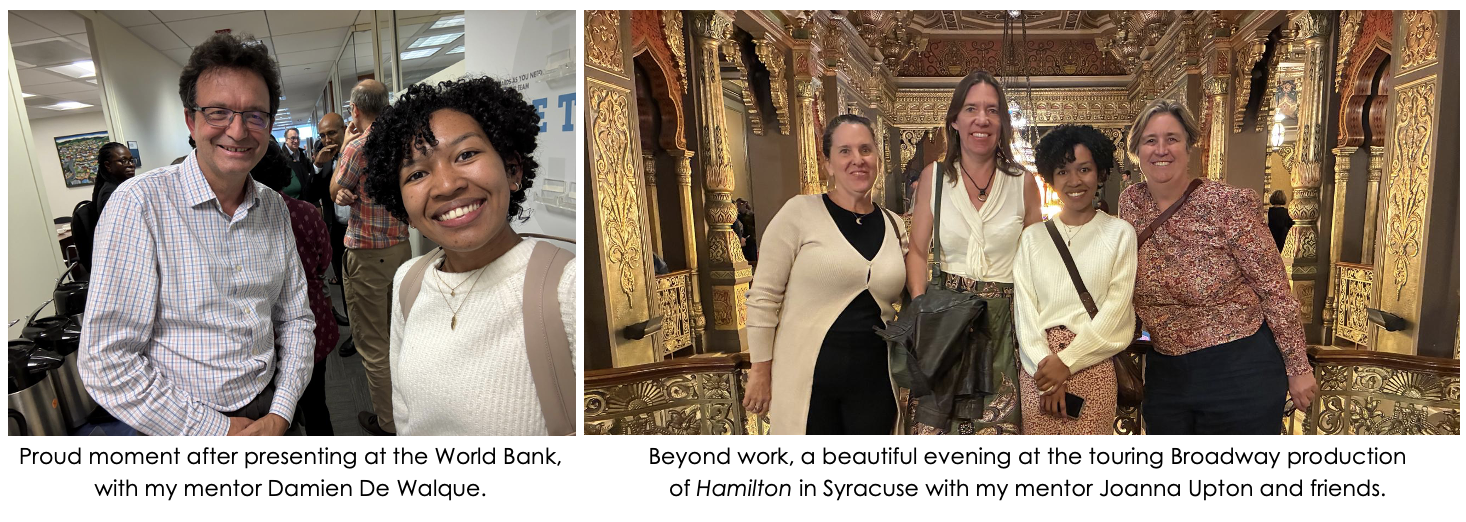
Meeting my two mentors, Joanna Upton and Damien De Walque, was another highlight: a precious opportunity to connect beyond emails and meetings, to truly get to know one another. What struck me most during the STARS Fellowship was not just the intellectual rigor, but the openness: even highly respected experts were willing to admit uncertainty, rethink assumptions, and say, “I don’t know. Let’s figure it out.” I understood that this was a learning process for everyone: they were there to help me improve, to share their expertise, and in their own way, to learn from me too.
Standing in the Court of Giants does not mean having all the answers. It does not mean never hesitating, never doubting, or never feeling small. It means showing up anyway. It means listening carefully, asking questions that may feel naive, and trusting that curiosity is not a weakness but a strength.
I realized I had been carrying my own “spoon of oil,” worrying about every detail of my paper. But, like in The Alchemist (Paulo Coelho), focusing only on that would make me miss everything around me. Our journey is never just one paper or one task; it includes all the little things happening around us.
Spending time with Cornell students, exploring Ithaca, and sharing simple moments with the other fellows reminded me that this trip was about much more than work. Their laughter, generosity, and the cultural exchanges we shared made it lighter and more memorable.
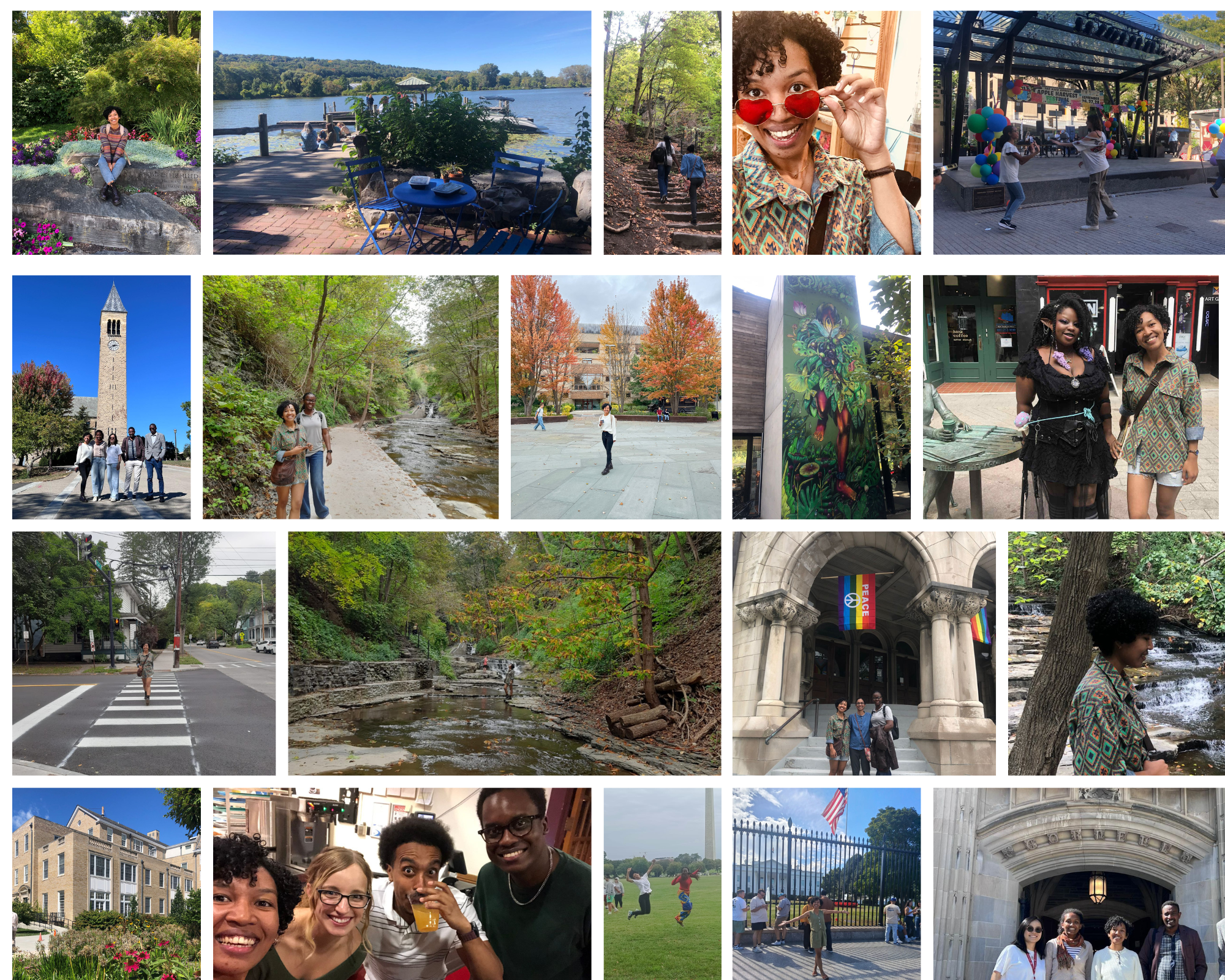
Ultimately, getting lost can be a way to enjoy your surroundings and find yourself.
I hopped on random buses in Washington, stepped off at unfamiliar stops, and let Google Maps guide me to Barnes & Noble in Georgetown, where I happily lost track of time among the books (Special thanks to the strangers who kindly took photos of me during these moments.). Amid these little adventures, Domoina and Aina welcomed me with incredible kindness, hosting me during the last days of my stay and showing me around Rockville. I also had the chance to spend time with another Aina, a graduate of the School of Agronomy at the University of Antananarivo from an earlier cohort, and his family. With them, I participated in a Gen Z demonstration in Washington, a memory that made me feel connected to both my Malagasy roots and the wider world at the same time.
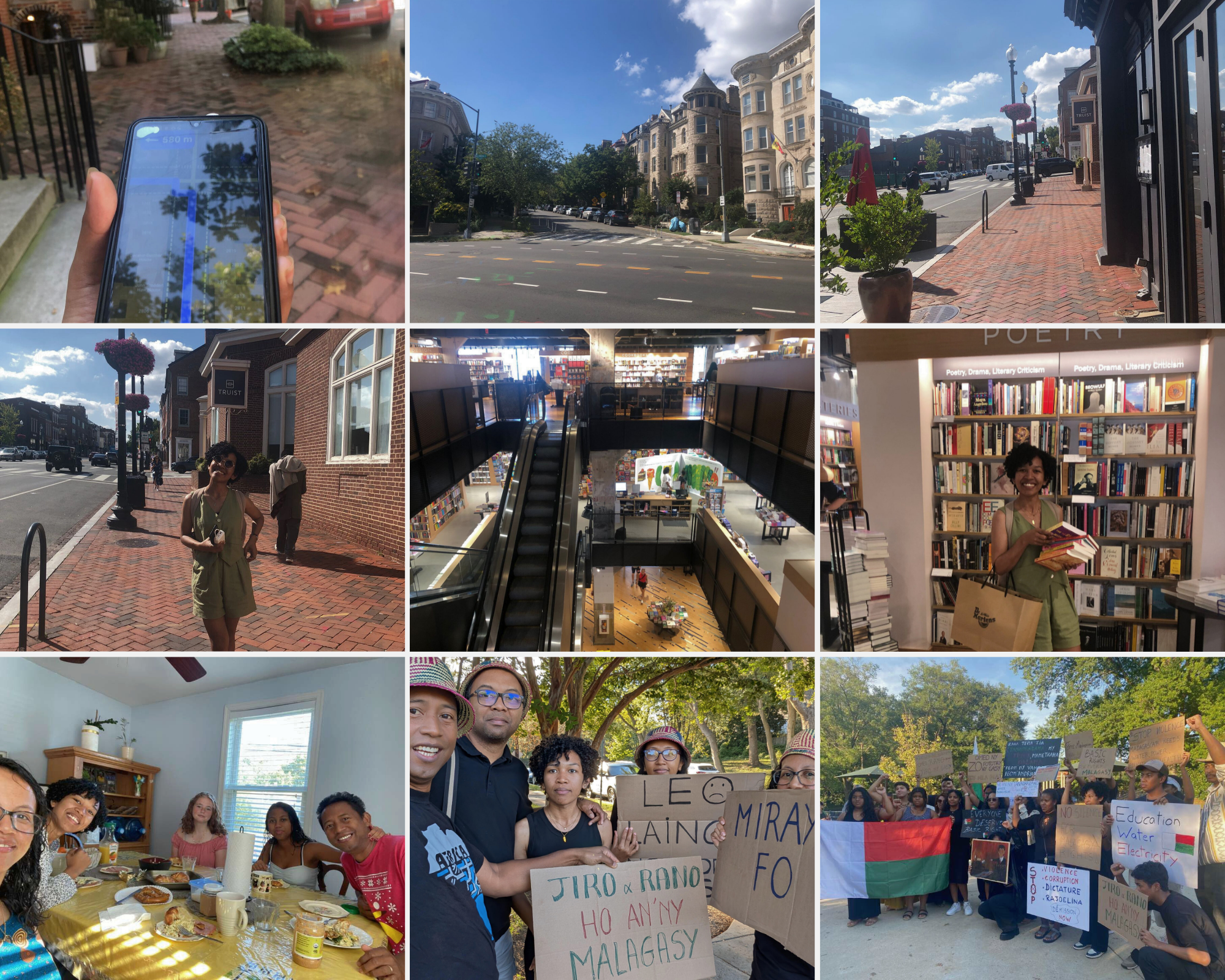
Looking back, I see a clear line connecting the muddy fields of South-Eastern Madagascar to conference rooms in New York and Washington, DC. The same skills mattered in both places: adaptability, humility, attention to people, and the courage to try, even when conditions are unfamiliar.
As always, I’m grateful for the funding from the European Union through the African Research Initiative for Scientific Excellence (ARISE) pilot programme implemented by the African Academy of Sciences.