
Between the 24th and 28th of March 2026, our team undertook a crucial mission in the Ambatondrazaka district. Far from being a mere administrative or legal formality, this fieldwork was a profound immersion into the socio-ecological dynamics that govern the management of protected areas. Our objective? The CGC (Community Governance Convention), a management tool designed to ensure the full participation of local communities in the co-management of protected areas, striving for a more effective and equitable approach to conservation.
Preliminary Phase: Preparing the Ground
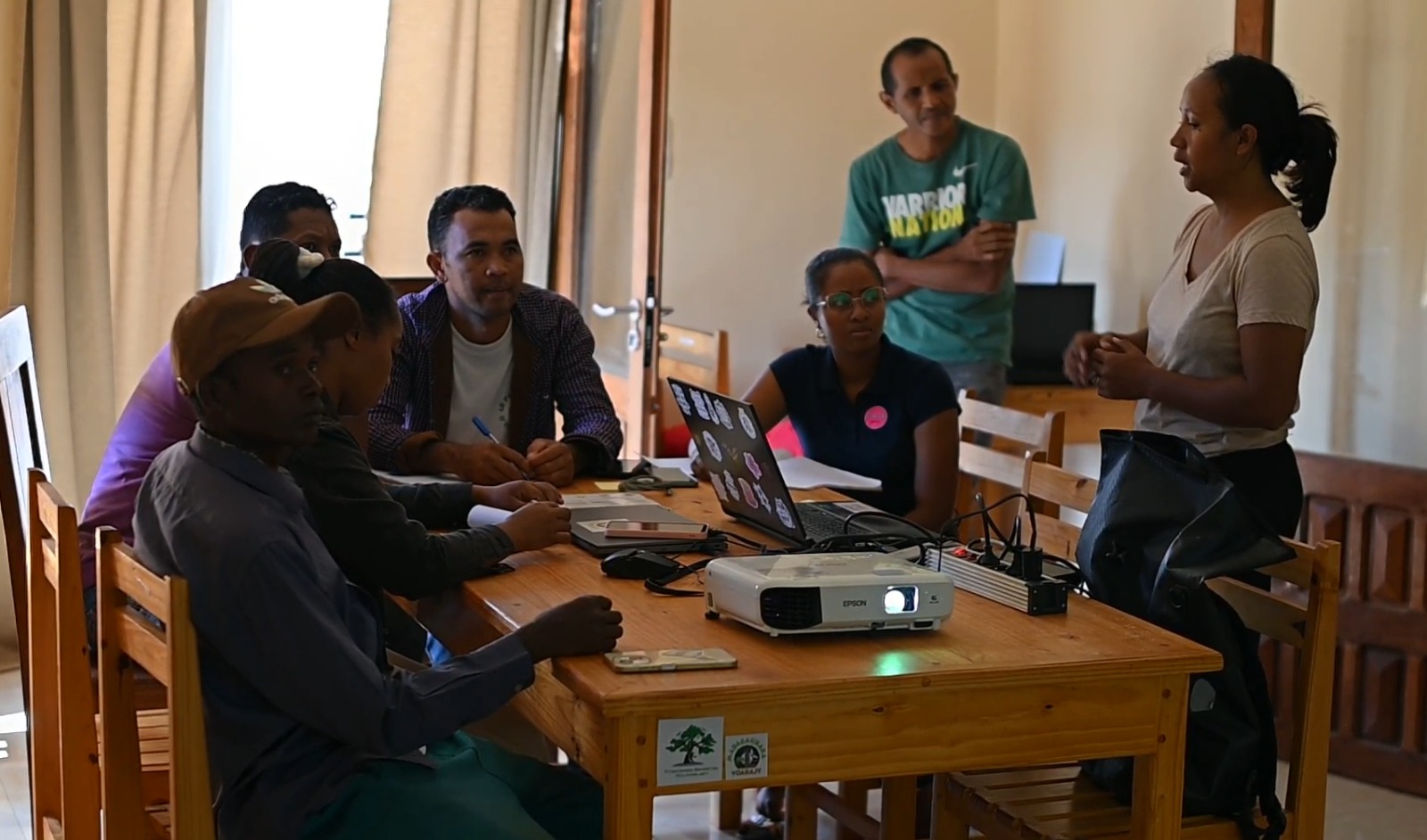
It all began with the bustle of preparations. Before engaging with the communities, we dedicated the field to capacity-building for the management team regarding the CGC. The aim was to master the tool while anticipating the inherent difficulties and challenges within the sector. This rigour extended to the institutional sphere during a courtesy visit to the Regional Directorate for the Environment and Sustainable Development (DREDD). This step was sine qua non to ensure that the state and those on the ground move in lockstep through every phase of the CGC’s implementation.
Mass information phase: balancing theory and local realities
The intervention focused on two fokontany within the protected area, each offering distinct yet complementary sociological perspectives.
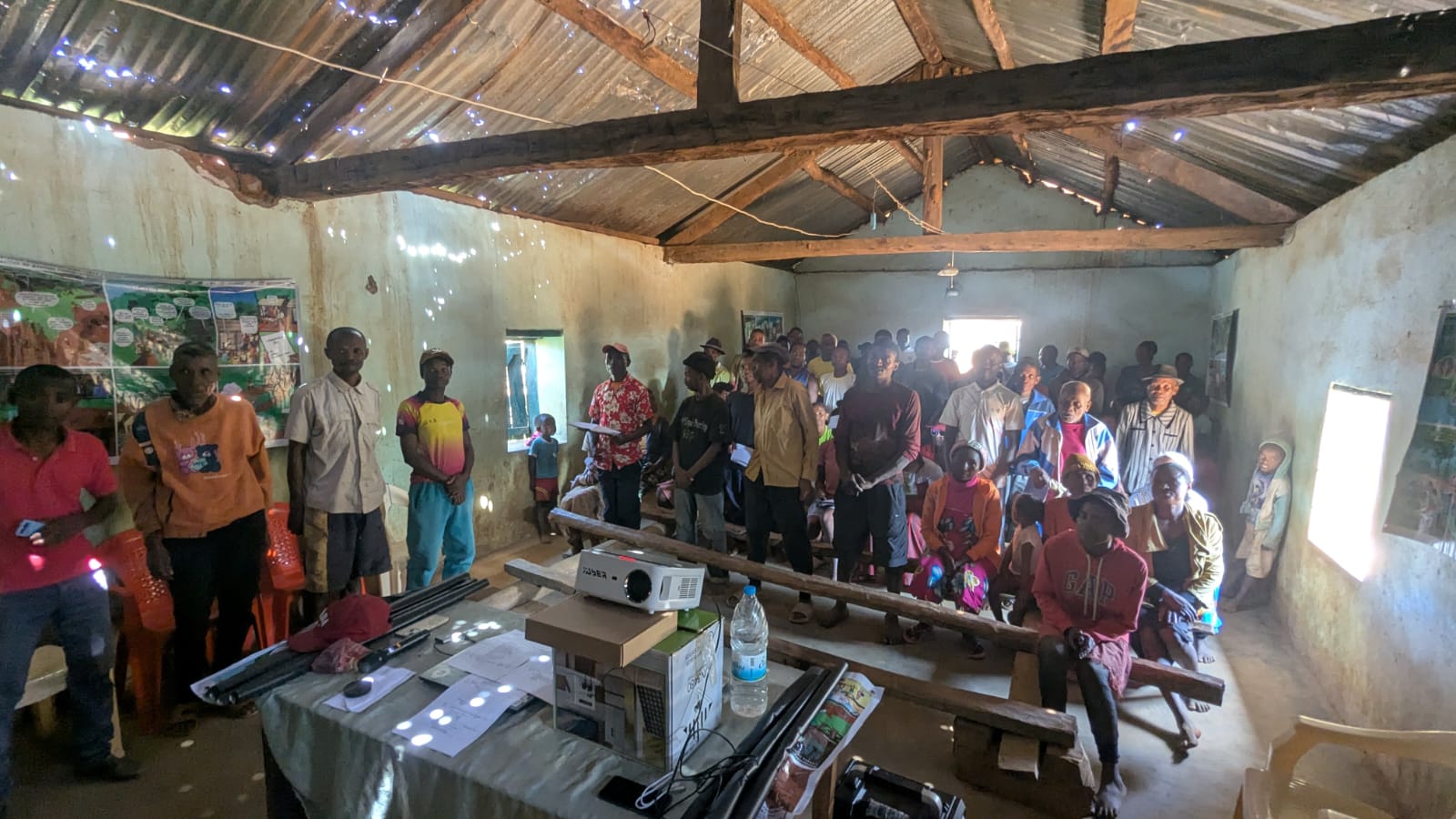
In the first fokontany, in Andranomadio, we were welcomed by an assembly of 115 engaged citizens (65 men and 50 women, without coutning minors). During a 130-minute session, dedicated to explaining the CGC, the rationale for its implementation, rigths and responsibilities toward protected area management, and open dialogue, we observed a keen interest in co-management. Although the protected area has not elicited significant negative impacts since its inception, the debate crystallised around collective responsibility and the communal interest in its stewardship.
In Andranokobaka, the context proved more complex. Before 70 participants (37 men and 33 women, without counting minors), it has been demonstrated that the proximity of the protected area has a direct impact on daily lives, intrinsically linked to its resources. Despite significant anthropogenic pressures in this zone (such as hunting and agricultural expansion), the fokonolona demonstrated a sincere desire for involvement, even initiating their own internal local sessions. They are already eager to progress to the next phase.
Synthesis phase
We leave Ambatondrazaka with the distinct feeling that something has shifted. Between the 185 participants we met and the intense debates that ensued, one conviction remains: we do not protect the forest from the people, but with them.
The CGC is no longer just an official document to be drafted. It is now a promise of collaboration and enhanced co-management, a tool that gives a voice to those who live off the land and for the land, moving us towards an equitable conservation.