Madagascar is undertaking a major reform for more effective… and fairer conservation.
Presented in August 2025 to the SAPM committee (https://mitsilo.org/a-new-era-for-madagascars-protected-areas-towards-more-effective-and-fairer-conservation/) and widely shared on December 10, 2025, the reform of Madagascar’s protected area policy, also known as the Environmental and Social Management Framework (Cadre de Gestion Environnementale et Sociale, CGES in French) places social equity and accountability at the heart of protected area management.
Why is this important?
Because our biodiversity is unique and highly threatened 🐒🌳, and because local communities still too often bear a disproportionate share of conservation costs.
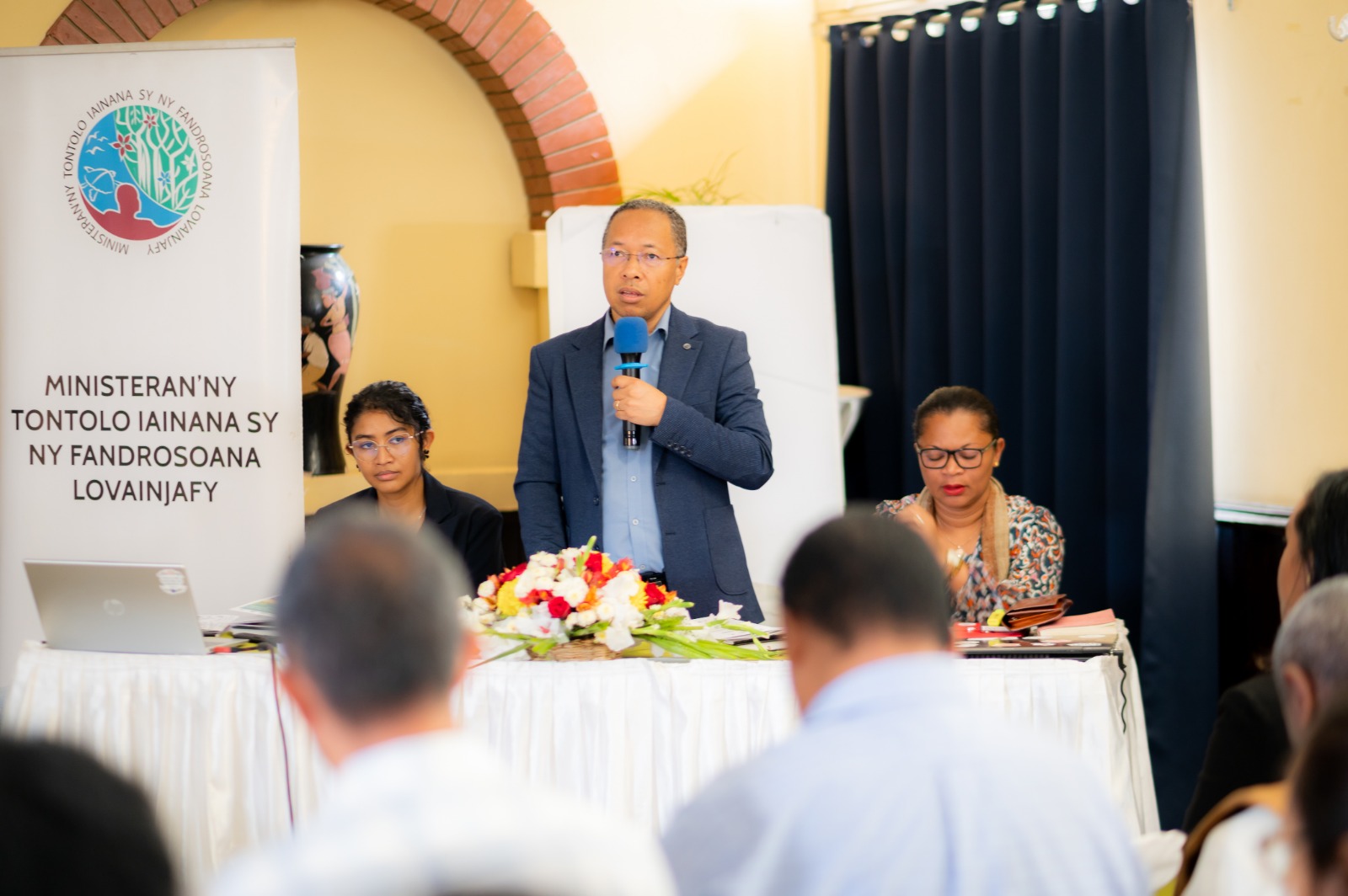
Welcome speech by the Director General of Environmental Governance
Lalaina from MEDD serving as the master of ceremonies during the workshop
Led by the Ministry of Environment and Sustainable Development, with support from Mitsilo Lab – ESSA Forêts (MIRARI project) and a national working group (MNP, USAID Hay Tao, Natural Justice, ONE, etc.), the initiative has combined research and consultation since 2020 to align with international standards while remaining rooted in local realities.
In concrete terms, the reform proposes guidelines for:
1. assessing social and environmental impacts
2. minimising damage and maximising benefits
3. ensuring transparent and inclusive monitoring
4. negotiating and formalising Community Governance Convention (CGC) that recognise the rights, voices and priorities of communities
Through this wide dissemination, the Environmental and Social Management Framework is now one of the official documents for protected area management under the Ministry of Environment and Sustainable Development. It is a fully operational and essential tool that guides protected area managers toward more effective and equitable environmental and social management, and it is available for use by all managers and complemented by practical tools designed to support them (available here).
A CGC pilot project in Itremo (with Kew Gardens Madagascar) shows that, with impartial facilitation, communities and managers can co-construct more balanced rules, restore trust and strengthen mutual accountability.
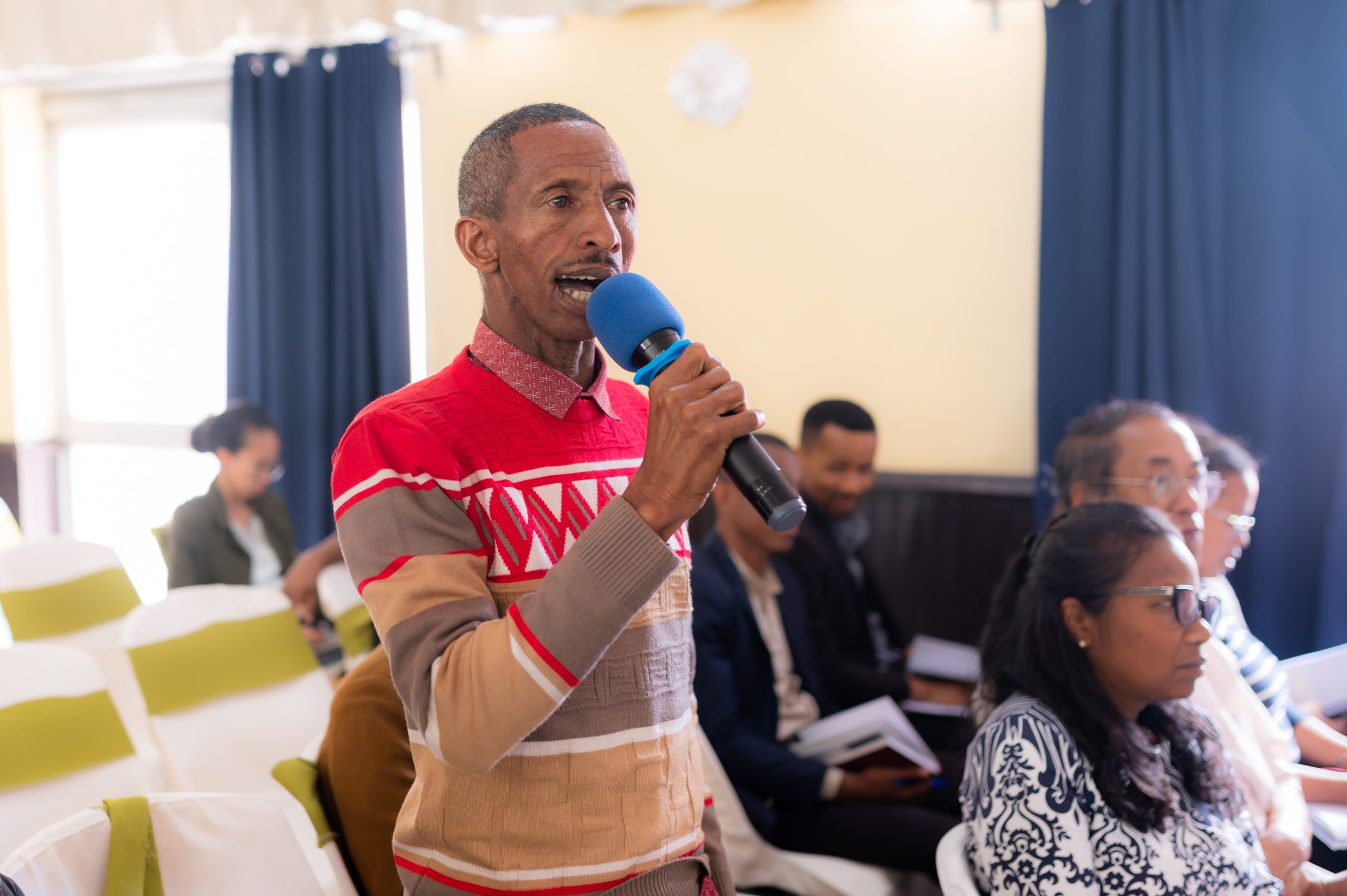
Testimony from a local community representative on their role in implementing the CGC
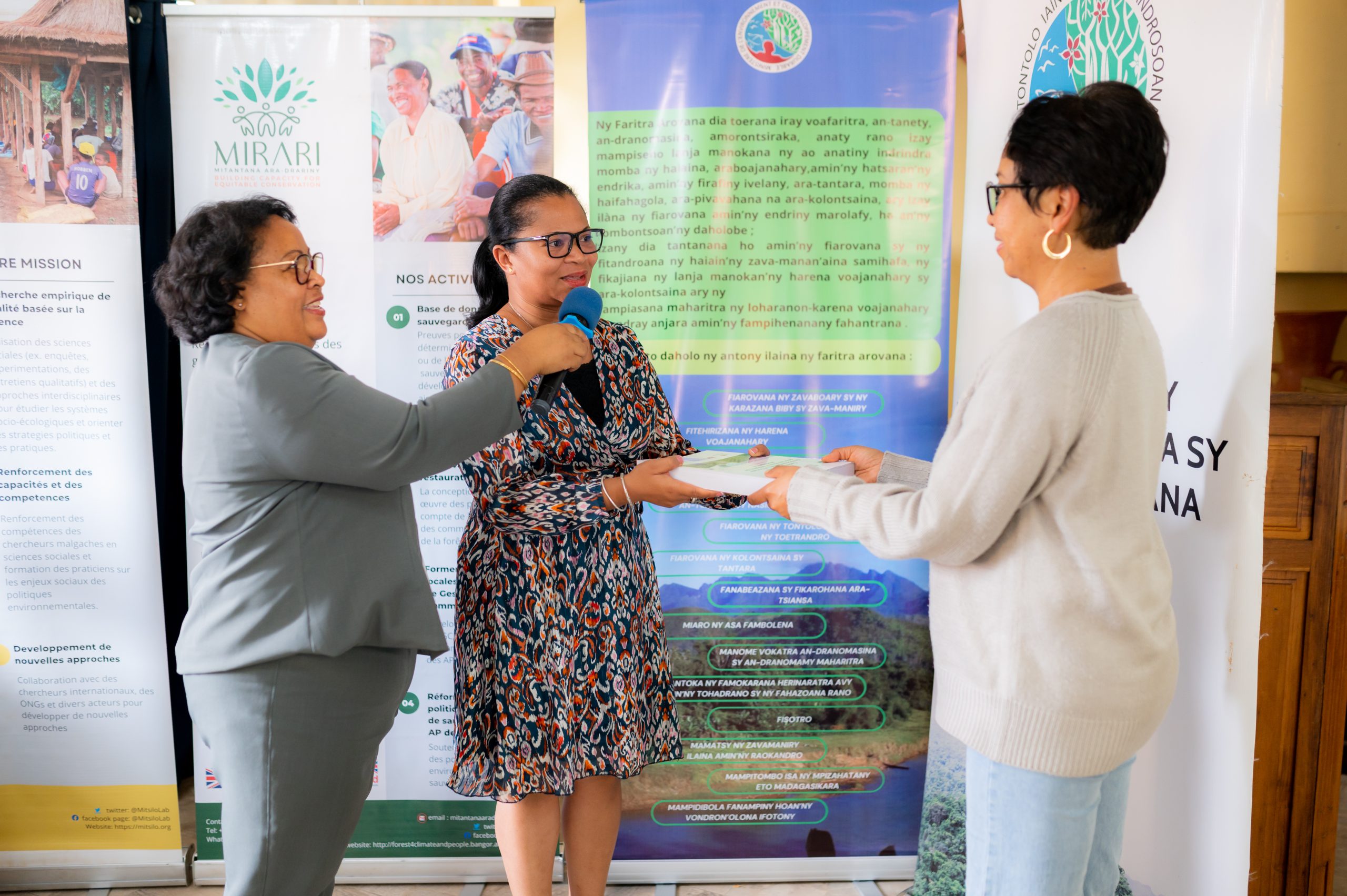
Official handover of the Environmental and Social Management Framework document from the Ministry of Environment and Sustainable Development to the Protected Area manager
Next steps
Next steps: extension of the CGC to other sites, dedicated funding, training, practical tools (guides, Q&A, films).
More than just a text, it is an approach: if the means, capacities and transparency follow, Madagascar can consolidate a model where conservation and social justice advance hand in hand.
The CGES emerged from this reform as a key policy tool; it provides managers with a coherent framework to anticipate, evaluate, and mitigate any harms they might cause to the environment and people’s livelihoods.
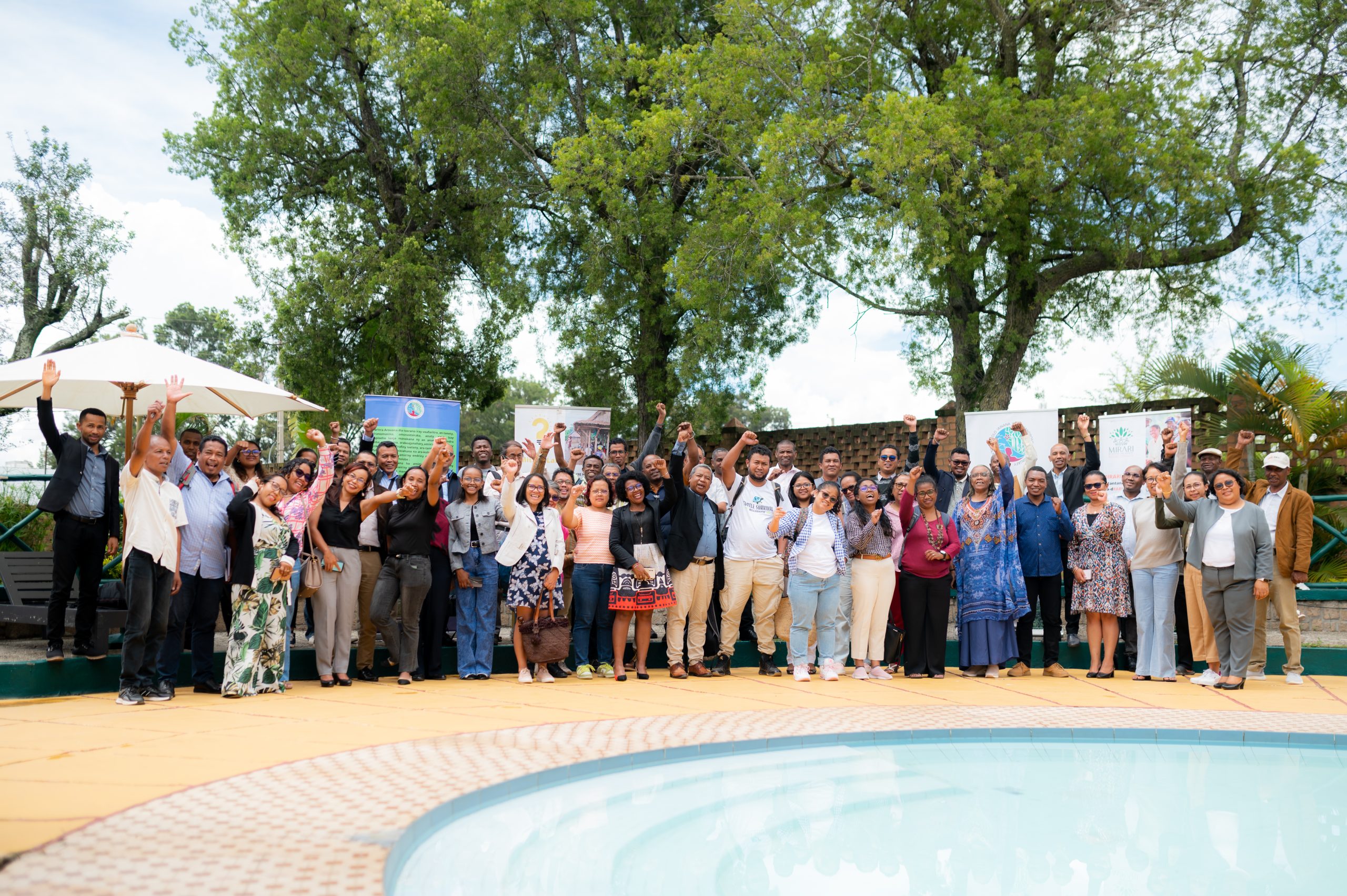
Group photo of participants at the workshop
Highlight video capturing key moments from the SAPM technical session and the nationwide dissemination of the Environmental and Social Management Framework workshops
2424MG feature report covering the workshop for the large-scale dissemination of the Environmental and Social Management Framework reform
Acknowledgments
This project was made possible through the CLARE Research for Impact (R4I) Opportunities Fund. CLARE is a flagship research programme on climate adaptation and resilience, funded mostly (about 90%) by UK Aid through the Foreign Commonwealth and Development Office (FCDO), and co-funded by the International Development Research Centre (IDRC), Canada. CLARE is bridging critical gaps between science and action by championing Southern leadership to enable socially inclusive and sustainable action to build resilience to climate change and natural hazards.
This workshop was carried out with the aid of a grant from the Ministry of Foreign Affairs of the Netherlands and the International Development Research Centre (IDRC), Canada. The views expressed herein do not necessarily represent those of the Ministry of Foreign Affairs of the Netherlands, or of the International Development Research Centre (IDRC) or its Board of Governors.